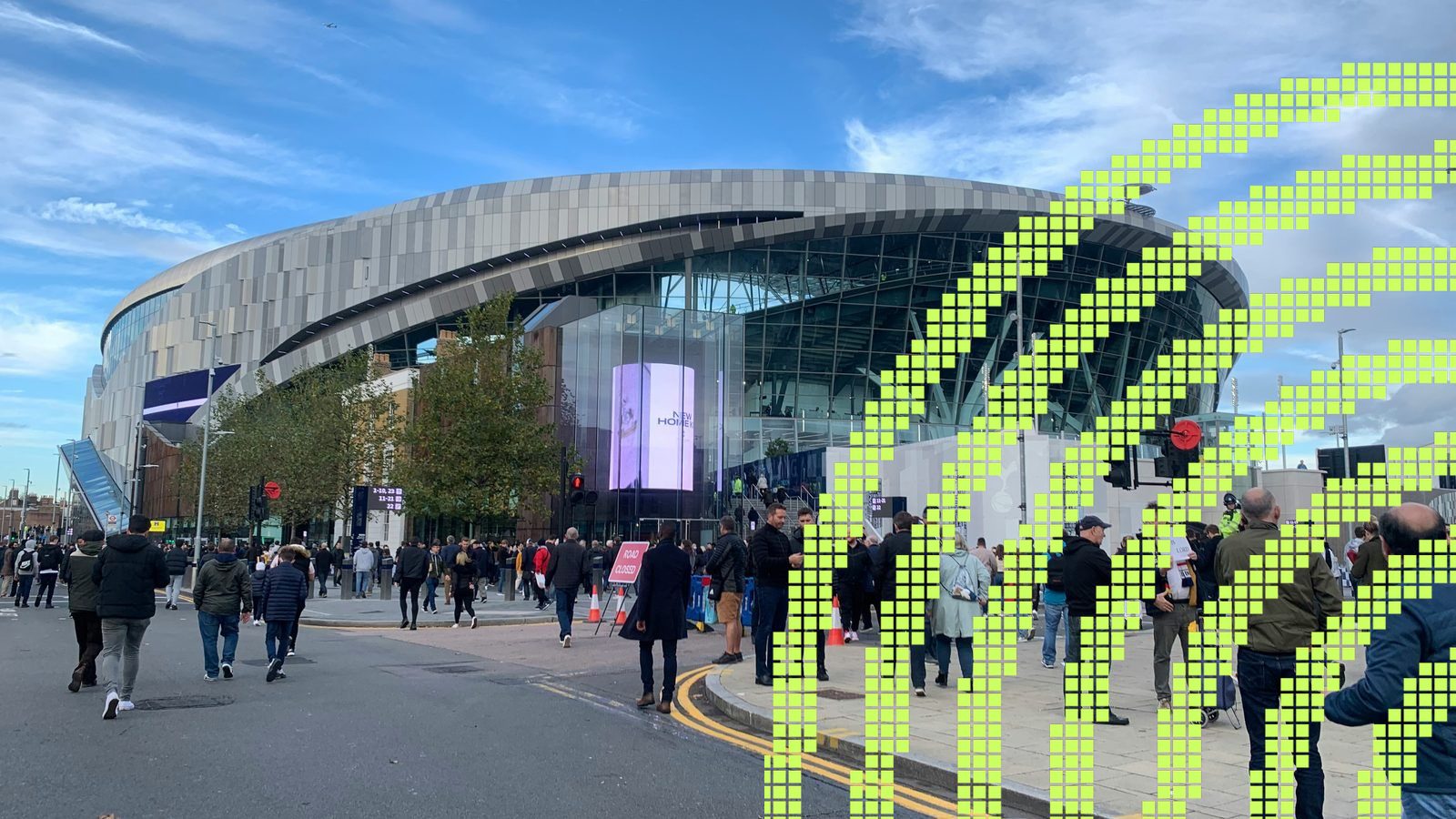
Premium stadium economics and the sensitivity worth stress-testing
Premium hospitality now drives 35 to 45% of matchday turnover at top Premier League stadia. It is not annuity-shaped revenue. It is equity-shaped, and it moves with sporting performance. Most capital plans aren't stress-testing for that.
On 3 May, theesk.org published a scenario analysis of what relegation would mean for Tottenham Hotspur’s financial and capital structure. The piece is a useful exercise on its own terms. It is also a stress test that every Premier League club building or expanding a premium stadium should be running, and most are not currently running.
35-45%
premium share of matchday turnover at top stadia
70%
SCR squad cost cap for European clubs
365
days of revenue that don't depend on fixture quality
Premium revenue is not annuity-shaped, it is equity-shaped
Premium hospitality and premium seats now account for 35 to 45% of matchday turnover at Tottenham’s stadium. The same shape, with slightly different magnitudes, sits in Arsenal’s plans for an expanded Emirates, in Newcastle’s medium-term stadium thinking, and in the redevelopment conversations elsewhere in the league. These plans are typically presented to ownership and lenders as debt-style annuities. A stable, contracted premium revenue base that supports the financing stack and underwrites the build cost.
The Tottenham analysis is useful because it sets out, clearly, that premium revenue is not annuity-shaped. It is equity-shaped. It moves with sporting performance.
Neil KentFounder, Earl
Premium customers, corporates booking seasonal hospitality, individuals on multi-year membership tiers, business networks renewing year on year, do not pay top of market to watch a relegation candidate. They pay big money to host clients at fixtures with brand value. The premium yield engine depends on fixture quality, which depends on league position, which depends in turn on squad investment and the last two transfer windows. None of those inputs is independent of sporting risk.
Why most capital plans underweight the sensitivity
Across the engagements we have run with Premier League clubs and their stadium campuses, the capital plans we see typically underweight this sensitivity. The base case assumes a settled top-six or top-eight finish, a stable continental calendar and a competitive squad. The downside case is usually framed as a single-season blip. The kind of multi-year sporting downturn that flows through to corporate renewal churn, downgrade in hospitality tier, conference cancellations and partner renewal pressure, is not consistently in the model.
Premium revenue is no longer just a function of sporting performance. It is a function of how stable that sporting performance is across cycles.
Year-round revenue as the offsetting layer
This is not an argument against premium stadia. The premium product is the right strategy for elite venues, and the capex is generally well placed. It is an argument for stress testing the capital plan against the right shape of risk, and for building the offsetting layer.
01
The offsetting layer
Year-round revenue
The conference and events book, music and entertainment tours, corporate experiences, food and beverage retail, partner activations operated across the full 365 days of the year. The venues that compound on year-round revenue absorb sporting downturns the matchday line cannot.
What we’d be doing now
This is the work we do at Earl
with Premier League clubs and their stadium campuses. The starting point is usually a stress test on the existing capital plan, followed by a year-round revenue build that runs on its own commercial calendar, independent of fixture quality. The objective is straightforward: a stadium business that compounds in good seasons and stabilises through the harder ones.
The Tottenham analysis is not really about Tottenham. It is about every club whose stadium economics assume the team will keep performing.