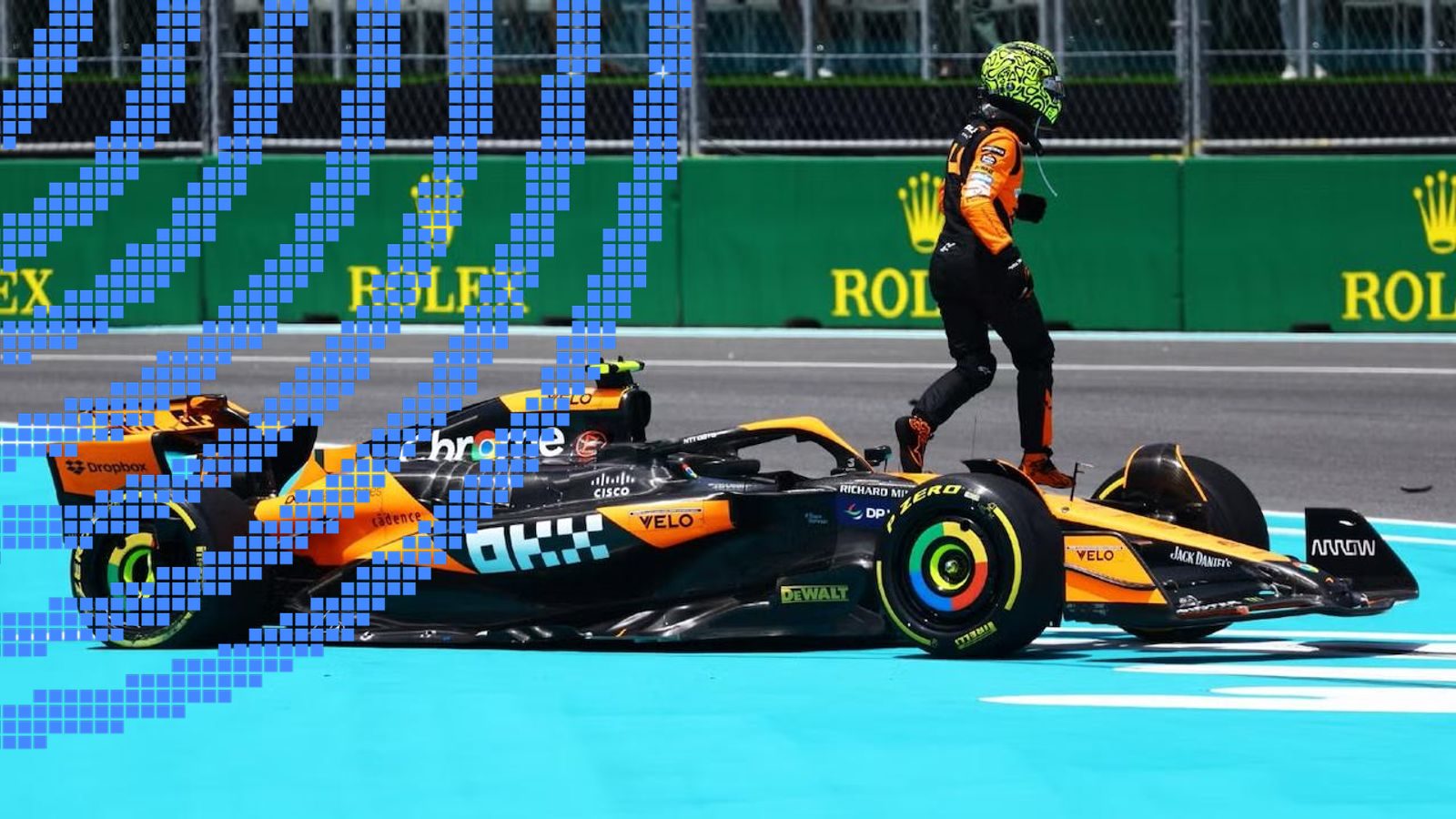
Three of the most powerful competitions in world sport have spent the last five years capping the one thing everyone assumed decided winning. Formula 1 capped what a team can spend building its car. The NFL and the NBA cap what a franchise can spend on players. From 2026-27, the Premier League caps what a club can spend on its squad. The headlines treated each as a story about fairness or cost control. The more interesting consequence is commercial, and almost nobody is saying it out loud. When you fix what a team can spend on winning, you move the competition into the commercial department.
What the F1 cost cap, the NFL salary cap and the Premier League squad cost ratio have in common
On the surface these are different instruments in different sports. Look at the mechanism and they converge.
Formula 1 introduced its cost cap in 2021 at $135m. For 2026 the base figure rises to $215m, but that jump is mostly reclassification rather than new spending power, because costs that used to sit outside the cap now sit inside it. Crucially, the cap covers car performance. It excludes driver salaries, the three highest-paid staff, and marketing and hospitality. Commercial activity sits outside the ceiling entirely.
The NFL runs a hard salary cap, set at $301.2m per club for 2026, the first time it has crossed $300m. That number is not arbitrary. It is calculated as a share of league revenue, so it climbs as the league’s media and commercial income climbs. The NBA works differently in form but not in spirit: a soft cap of $154.6m for 2025-26, based on basketball-related income, with a punitive second apron at $207.8m that strips away the tools a team needs to hoard talent.
The Premier League is the newest arrival. In November 2025 clubs voted to replace the Profitability and Sustainability Rules with a Squad Cost Ratio from the 2026-27 season. SCR limits spending on players, coaches, amortised transfers and agents’ fees to 85 per cent of football revenue. A proposal for top-to-bottom anchoring, which would have functioned as a hard cap, was rejected.
Four leagues, one shared idea. There is now a ceiling on the money that used to separate the winners from everyone else.
Why capping sporting spend moves the competition into the commercial department
Sport has always had two engines. The sporting engine buys performance directly: better players, faster cars, deeper squads. The commercial engine funds it. For decades the sporting engine was where clubs competed hardest, because the club that could outspend its rivals usually out-performed them.
A cap breaks that logic. If every serious rival is pressed against the same ceiling on car development or squad cost, then spending is no longer where you create separation. The separation has to come from somewhere the cap does not reach. In every one of these systems, that somewhere is commercial revenue.
This is not a theory waiting to be tested. Formula 1 has already lived it. One analysis of the sport’s finances put it directly: the cost cap compressed budgets across the grid and pushed teams to maximise commercial income to offset the ceiling. By 2025, McLaren had built a record 53 active commercial partnerships generating more than $148m in a single season, the most in the sport’s history. That is not a marketing achievement sitting alongside the racing. Under a cost cap, it is the racing strategy.
Does growing commercial revenue actually raise what a club can spend on the pitch?
Here the systems split in an important way, and it is worth being precise, because the answer changes the stakes.
The F1 cost cap is a fixed ceiling in dollars. Earning more commercial income does not lift the amount you are allowed to spend on the car. What it does is let you spend right up to the cap every year without straining the business, fund everything the cap excludes, and build the financial resilience that keeps a team on the grid. Commercial revenue is the uncapped ground where teams still differentiate.
The revenue-linked systems are stronger still. The NFL cap is a percentage of league revenue. The Premier League’s Squad Cost Ratio is a percentage of each club’s own football revenue. In these models, commercial growth does not just fund the team around the cap. It raises the ceiling itself. A Premier League club that grows its football revenue is a club allowed to spend more on its squad the following season, entirely within the rules. Commercial performance and sporting headroom become the same conversation.
That is the shift worth internalising. Commercial revenue used to be how you paid for ambition. Under these rules it is increasingly how you are permitted to have any.
What a capped league rewards is the club that can prove and sell its audience
If commercial revenue is the new competitive variable, the obvious question is what actually grows it. The answer is not more inventory. It is better evidence.
The brands writing the largest cheques in capped sport are not buying logos. They are buying access to an audience they can understand, segment and measure. Technology and financial-services companies now lead new investment into F1, and AI brands that were absent from the sport two years ago are among its fastest-growing category of sponsors. These buyers evaluate a rights-holder the way they evaluate any other media investment. They want to know who the audience is, what it is worth, and what the partnership will return.
That rewards a specific kind of club: the one that can describe its commercial relationships and its audience with precision, in real time, in a form a sophisticated buyer trusts. The club that can prove the value of its assets prices them higher and defends those prices in the room. The club that cannot is left arguing from reputation while the cap quietly closes the gap between it and everyone else.
The uncomfortable part is that most commercial departments were not built for this
Here is the problem. The commercial function in most elite sports organisations was built for a world where commercial was the support act. It ran on relationships, a strong sales deck and an annual report. That was enough when spending on the pitch did the real competitive work.
Under a cap it is not enough. A commercial department that cannot continuously value its own relationships, spot which prospects are warming, and evidence audience value to a buyer is now a competitive weakness, not just an administrative one. The infrastructure has not caught up with the stakes.
This is the work Earl exists to do . We build the commercial operating system that turns a rights-holder’s scattered relationships, data and inventory into something that can be measured, scored and sold with the rigour a capped league now demands. It usually begins with a diagnostic: a clear-eyed assessment of where the commercial value is, where it leaks, and what a modern operating layer would change. In a sport where you can no longer simply outspend your rivals, the commercial operation is not the thing that pays for the advantage. It is the advantage.
The cap changed the question every serious club now has to answer. It is no longer how much can we spend to win. It is how good is our commercial operation, because that is the part of winning nobody capped.