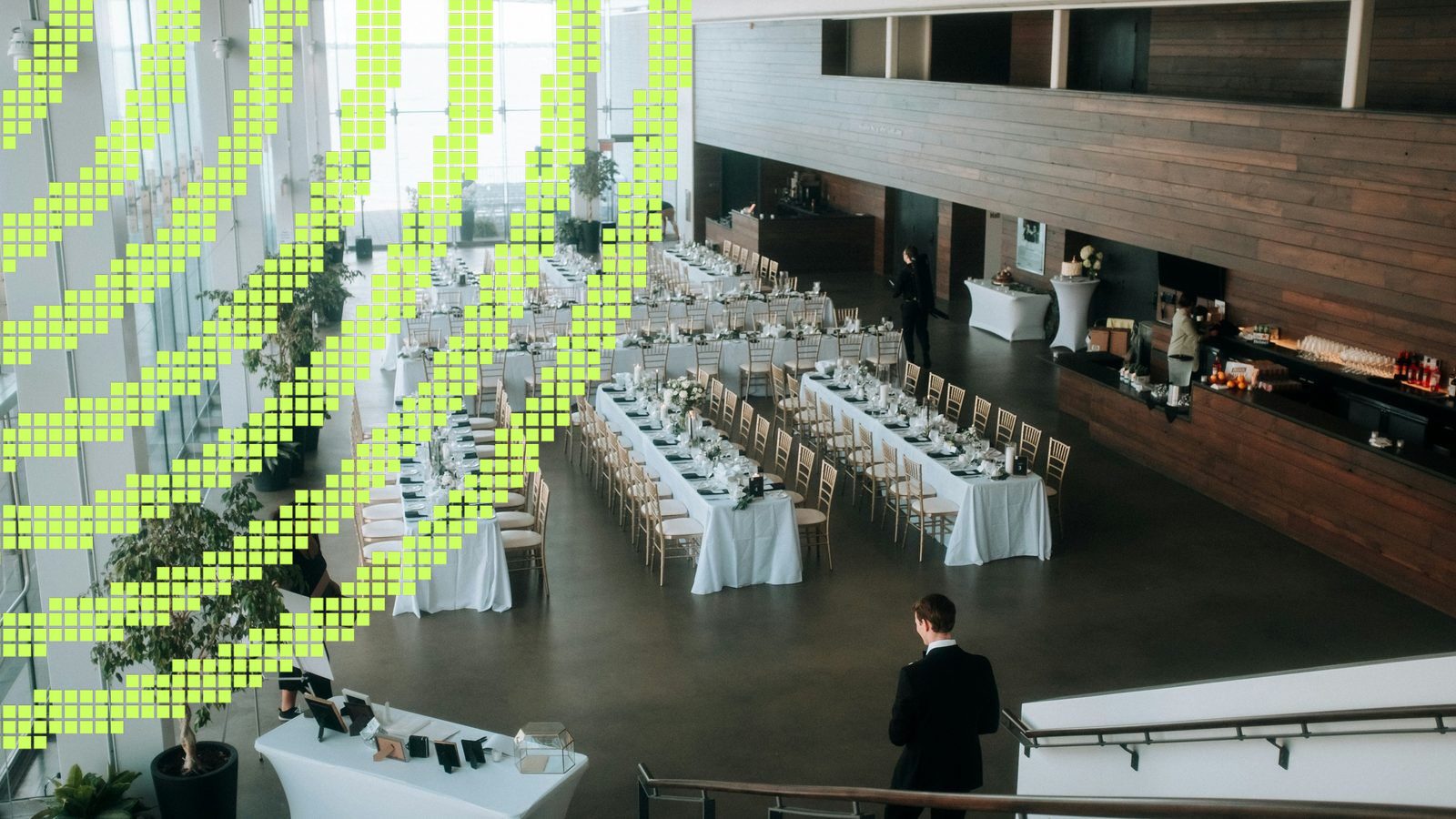
There is a specific type of commercial frustration that is becoming more common in elite sport venue operations. The physical product is genuinely exceptional. The catering and hospitality infrastructure is built to handle 60,000 people on a matchday and can reconfigure for a 200-person board dinner the following Tuesday. The conference and events team has collected industry awards. The delegate packages are competitive at the top of the London market.
And yet the corporate event buyer, the one who books the 800-person product launch or the 400-delegate annual conference, does not find the venue. Not because it lacks quality. Because they searched in ChatGPT.
This is the gap that almost nobody in elite sport venue operations has addressed. The investment has gone into the physical product, the events team, the award entries, the hospitality infrastructure. The investment has not gone into the channel through which the commercial buyers who need that product now begin every search.
Where event buyers search in 2026
The shift is not gradual and it is not partial. A January 2026 Search Engine Land study found that 37% of consumers now start their searches in AI rather than Google, a figure that has grown sharply from under 10% two years prior. In the events and hospitality sector, the shift is more pronounced still: according to Events in Minutes, 72% of event planners now discover venues through online platforms or AI search before they ever make direct contact with a venue.
This is not speculative. Event planners open ChatGPT, Perplexity or Google AI Overview and ask in plain language: “best large-scale corporate event venue in London,” or “conference venue for 1,000 delegates with on-site catering and hotel,” or “unique corporate away day venues near central London.” The platform returns two to seven recommendations. If a venue appears in that response, it is in contention. If it does not appear, the buyer moves on. The venue does not know the search happened.
The practical consequence is that a venue competing for corporate event business in 2026 is operating in two markets simultaneously. The first is the traditional one: direct sales, agency relationships, venue directories, returning clients, word of mouth. The second is AI-driven discovery, where a buyer the venue has never interacted with forms a shortlist before anyone has exchanged contact details. Most elite venue operations are active in the first market and absent from the second.
The sold-out matchday dynamic
There is a structural reason why this matters more for elite stadium venues than for most of their competitors in the corporate events market.
At the top end of Premier League stadium hospitality, the premium matchday tiers are largely sold. Tunnel Clubs, Directors’ Boxes, and premium suite packages at leading clubs carry multi-year waiting lists. This is commercially excellent. It is also a signal about where the growth room is.
If the matchday premium operation sells itself, the incremental commercial opportunity sits almost entirely in the non-matchday calendar. The dark days, the conference programme, the concert and entertainment pipeline, the corporate hire business. That is where revenue can grow.
The irony is that the same quality that fills the matchday premium tiers, the kitchen, the service model, the infrastructure, is the quality that makes the non-matchday operation genuinely competitive in the London corporate events market. The product is there. The discovery layer is not.
What AI platforms are not reflecting
The specific failure modes vary, but several repeat consistently across elite venue operations.
Event capacity and configuration data is frequently not in AI-searchable formats. A venue with substantial square footage of exhibition space and dozens of dedicated meeting rooms should appear unambiguously in AI responses for large-scale corporate events in London. Often it does not, because that data lives in a PDF brochure or a venue hire page that has not been structured for AI indexing.
Non-matchday track record is almost never visible. The number of major concerts and entertainment events hosted, the calibre of the global tours that have chosen the venue, the year-on-year growth in the non-football events calendar: these are exactly the commercial signals that build AI platform confidence in a venue’s credentials. They need to be present and linked at the right authority levels. They rarely are.
B2B discovery signals are typically absent entirely. Most elite stadium digital presences are built primarily for fan audiences, with venue hire marketing as a secondary layer. AI platforms reflect that weighting. A venue that wants to reach corporate event buyers, entertainment promoters and conference organisers through AI needs a distinct and coherent B2B information signal. The fan-first architecture works against it.
Corporate client experience signals are almost universally missing. AI platforms build responses from third-party corroboration as much as from first-party claims. The gap between what a venue says about its events operation and what is independently visible about the experience of booking and using it is significant in most cases.
The 365-destination ambition and the AI visibility gap
The commercial language around elite venues has shifted over the past five years. The best operators no longer describe what they have built as a stadium with events capability. They describe it as a destination: a year-round campus generating commercial value on every day of the calendar, not only the eighteen or twenty matchdays a season.
This framing is commercially correct. The physical investments at leading stadium campuses support it. Hotels under construction adjacent to the pitch. Residential developments bringing permanent footfall within walking distance. Retail, restaurants, cultural programming, tours and attractions that draw visitors independent of the football.
A destination that cannot be found in AI search is underperforming against its own stated ambition. The destination language implies year-round commercial relevance. AI platforms are the primary channel through which year-round commercial buyers, event planners, hotel guests, and corporate clients now discover destinations. If the discovery layer does not match the physical investment, the commercial return on that investment is smaller than it should be.
The compounding problem
The events calendar at leading stadium venues is not static. The number of non-football events has grown consistently year on year across the Premier League’s best-equipped stadiums. More concerts. More corporate events. More third-party entertainment programming. More dark days being converted to revenue.
This is the right direction. It is also a dynamic that makes the AI discovery gap more consequential over time, not less.
More events means more inventory to fill, more qualified buyers to reach, and more commercial moments that depend on the right people finding the venue before they settle on a competitor. A venue running thirty non-football events a year with weak AI visibility is missing a manageable number of leads. A venue that grows to fifty events with the same AI profile is missing proportionally more, from a larger and more commercially significant calendar.
The right time to address this is before the growth, not after. The venues that will benefit most from AI-driven non-matchday revenue growth over the next two to three years are the ones that build the discovery infrastructure now, while the events operation is still scaling and the commercial potential has not yet been fully captured.
What changes when the discovery layer is built
The commercial case for addressing AI visibility in elite venue operations follows from the structure of the market.
Corporate event buyers are using AI to shortlist. The venues that appear consistently and accurately in those responses are receiving inbound enquiries from qualified buyers they did not contact. Those enquiries convert at higher rates than cold outbound, because the buyer has already formed a positive view of the venue before they get in touch. The venues that are absent from those responses are relying on more expensive and less scalable channels to fill the same inventory.
Earl works with elite sports venues on exactly this problem. Our AI Visibility Diagnostic maps what AI platforms currently return for a venue across all commercially relevant query types: event and venue hire discovery, delegate and conference searches, entertainment and hospitality queries, B2B corporate buyer research. It benchmarks that against what an accurate and commercially optimised AI profile should return, and quantifies the gap by revenue opportunity. The diagnostic runs over four to six weeks at a fixed fee of £75k.
At venues where non-matchday revenue is measured in tens of millions, the commercial case is clear. The venues that move earliest on this capture the inbound enquiries their competitors are missing now, and build an AI platform presence that compounds as the channel grows. The window before every significant competitor addresses the same gap is not indefinite.